Why Everyone Is Talking About Cortisol Right Now
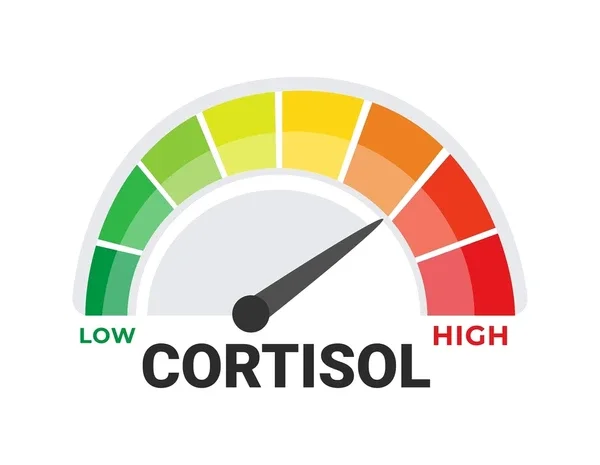
If you spend any time reading about health or wellbeing lately, you will have noticed the word cortisol appearing everywhere.
It’s often spoken about as though it’s something new or something dangerous that suddenly needs fixing. In reality, cortisol is neither of those things. It’s simply one of the body’s natural hormones and plays an important role in how we function each day.
Cortisol helps regulate energy, metabolism, blood pressure, and our sleep/wake cycle. It’s also part of the body’s natural response to stress. When something requires our attention or action, cortisol helps the body mobilise and respond.
In small, short bursts this is incredibly helpful. The body rises to the occasion, deals with what it needs to, and then settles again.
The difficulty arises when the body never quite returns to that settled state.
Modern life asks a great deal of our nervous systems. Constant information, busy schedules, financial pressure, and the general pace of life mean many people spend long periods operating in a heightened state of alert. Over time, the body can begin to feel as though it is always “on”.
People often describe this feeling in similar ways. They may feel tired but unable to properly relax. Sleep can become lighter or more restless. There may be tension through the body, difficulty switching off the mind, or a general sense of running on empty while still feeling wired. And lately a lot of my clients have talked about feeling “burdened” by life.
This is the point where cortisol begins to enter the conversation more often.
The discussion around cortisol is really a discussion about the nervous system and the body’s ability to move between activity and rest. Our nervous systems are designed to respond to challenges and then return to balance once those challenges pass. When that cycle becomes disrupted, the body can remain in a prolonged state of stress.
Rather than being a problem to eliminate, cortisol is simply a signal that the body has been working hard to keep up with the demands placed upon it.
Supporting the body back toward balance often begins with creating moments where the nervous system can genuinely settle. Slowing the pace, allowing space for rest, and engaging in therapies that encourage deep relaxation can all help guide the body back into a more restorative state.
So what should I do about it?
Reflexology is one of the gentle ways many people support this process. By working with specific reflex points on the feet, the treatment encourages the body to shift out of a heightened stress response and into the parasympathetic state often described as rest and digest. This is where the body is able to repair, restore, and rebalance.
For many people, the experience is less about fixing something and more about giving the nervous system the opportunity to do what it was designed to do all along… settle.
The recent conversation about cortisol may come and go as health trends often do. What remains constant is the importance of rest, regulation, and listening to the signals our bodies quietly send when they need support.
Sometimes the most helpful step is simply allowing the body a little space to slow down. Come see me and let’s get started.